What Belongs Here: A Year in the Life of the Ecological Belonging Network
It Started with Love
In one of our early online gatherings this year, something unexpected happened. As people introduced themselves, the usual professional protocols fell away. Instead of credentials, people spoke about love—love for the land they come from, love mixed with heartbreak, love that brought them searching for a community where they could speak about ecological belonging in its deepest sense.
That moment set the tone for everything that followed.
A Network Takes Root
When the Ecosystem Network for Ecological Belonging officially launched in May 2025, we began with a clear intention: that no one should feel alone in this work.
The network was created to connect people who are exploring ecological belonging in their own places—through education, art, land-based practice, ritual, community-building, and cultural work. We started the EBN to offer a space for learning, companionship, and collaboration across geographies and contexts, and to strengthen the collective field of this work.
Over 50 members from 24 countries joined—educators, artists, movement builders, bioregional thinkers, and community practitioners. Across different landscapes and cultures, each person brought their own relationship with the living world, and their own questions about what it means to truly belong.
Meeting Beyond the Screen
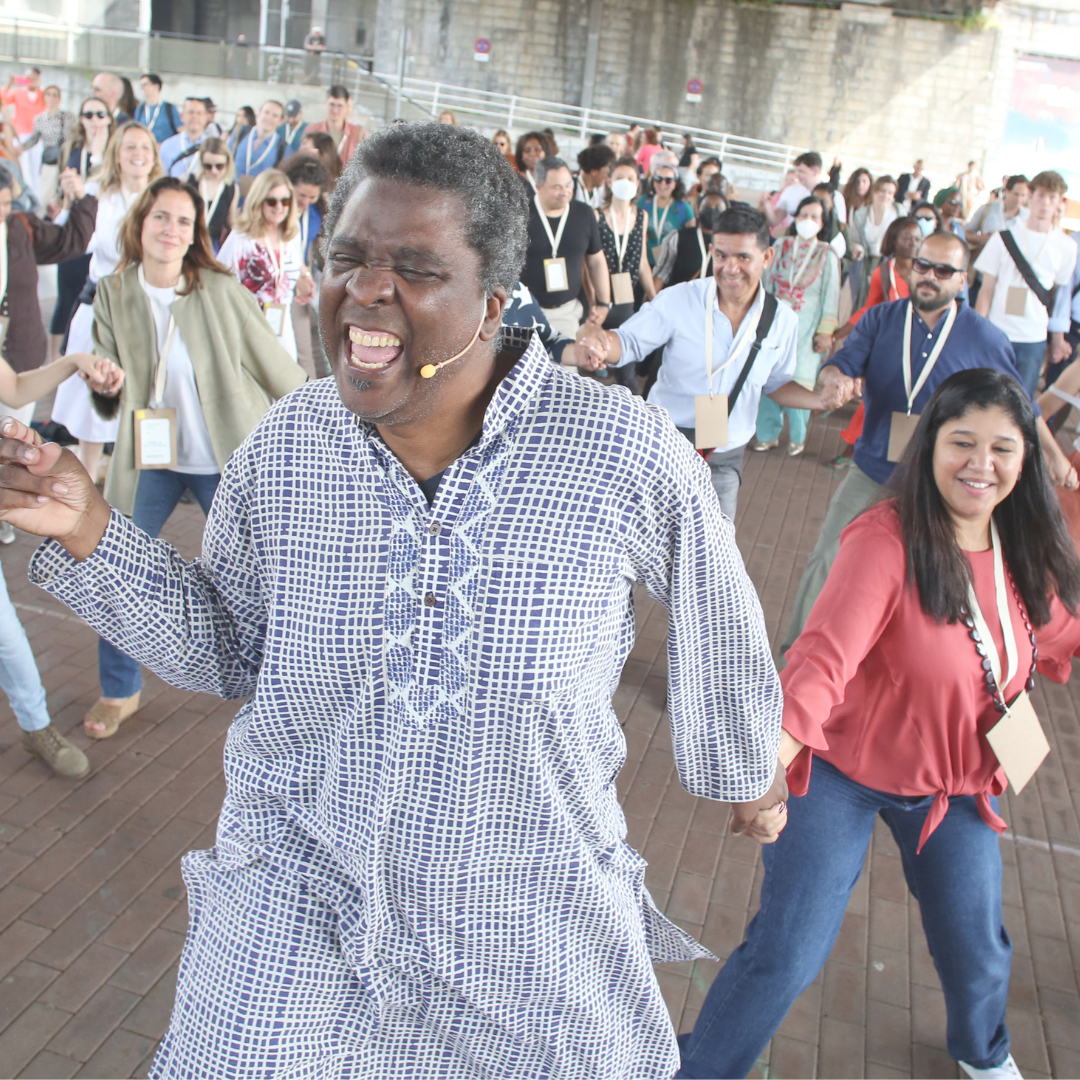
Just a month after launching, in June, some of us gathered in person at the Global Hearth Summit. Eight members of the Ecological Belonging Network traveled to be there, and what unfolded went beyond anything a video call could contain. Sitting in the same room with people you’ve only known through screens shifts something. You recognize each other differently—in gestures, in laughter, in the pauses between words.
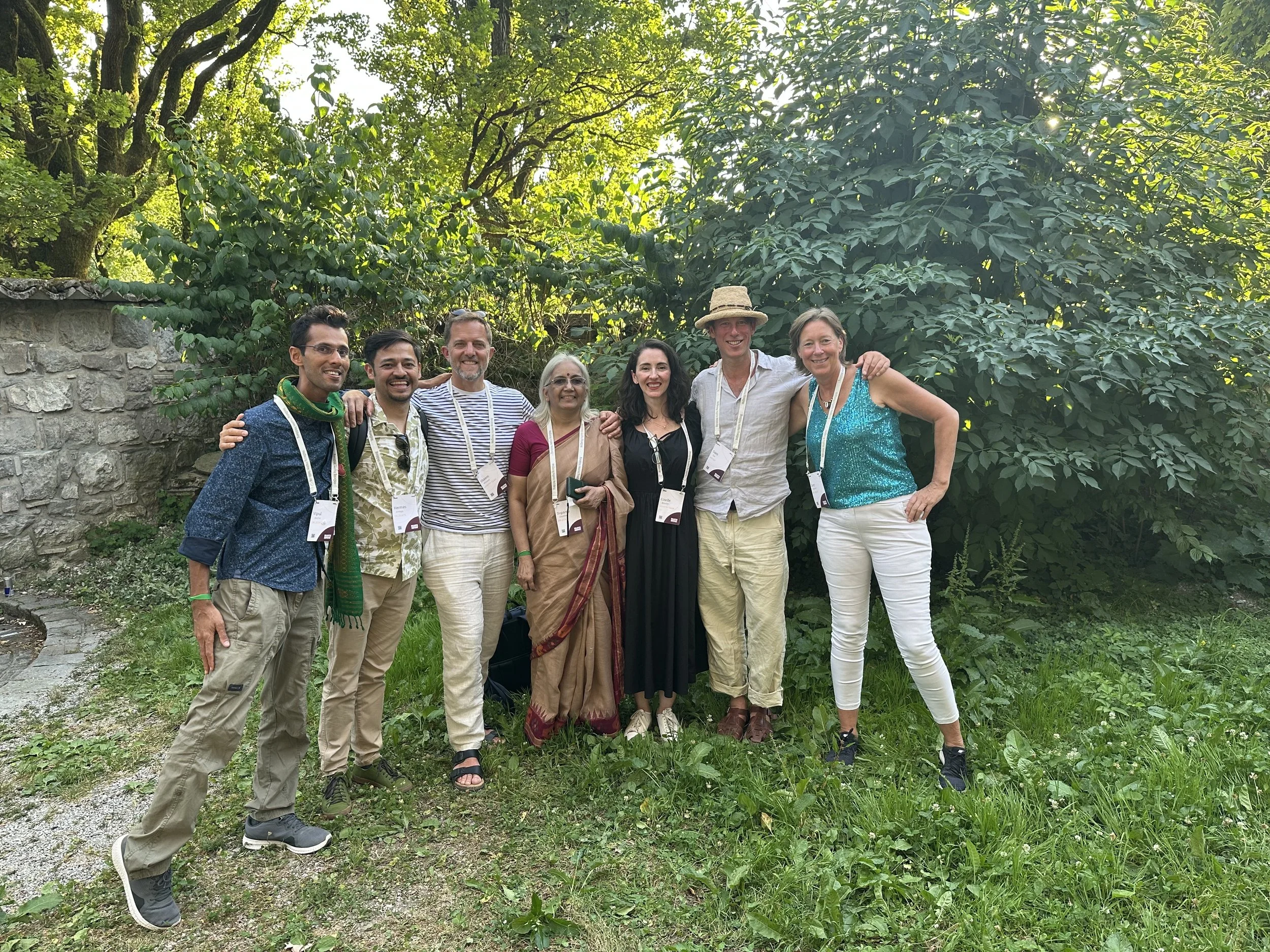
Ecological Belonging Network meets at the Global Hearth Summit 2025
The summit gave us the Hearth Feast, a ritual gathering we helped design, drawing on the Hearth Dinner practice and the 20+ Hearth Dinners hosted by members around the world. Rooted in the principles of ecological belonging, the Hearth Feast transformed a shared meal into a space of collective reflection and ceremony. Even with a large number of people, it created conditions for intimate, meaningful conversation. The experience wove nourishment and narrative together, and the depth of connection it generated has become a foundation we continue to build on
When the Magic Started
After the summit, regional collaborations began to take shape. In India, a hub began forming as members started meeting regularly and exploring how ecological belonging could be practiced in their specific landscapes. More recently, in collaboration with fellow therapists, educators, Indigenous knowledge holders, and land stewards, members of the India hub have begun co-designing and facilitating one of the country’s first Adventure and Nature-Based Therapy programs. In Brazil, another hub emerged with its own rhythm and energy, shaped by the relationships and practices growing in that region.
Alongside these local connections, we also introduced Belonging Circles, small groups designed to support peer connection, mutual learning, and ongoing conversation. So far, 6 circles have formed, each with 4 members meeting regularly. These groups have created space for deeper relationship-building across distance and have helped sustain momentum, reflection, and care throughout the year.
Surfacing What's Already There
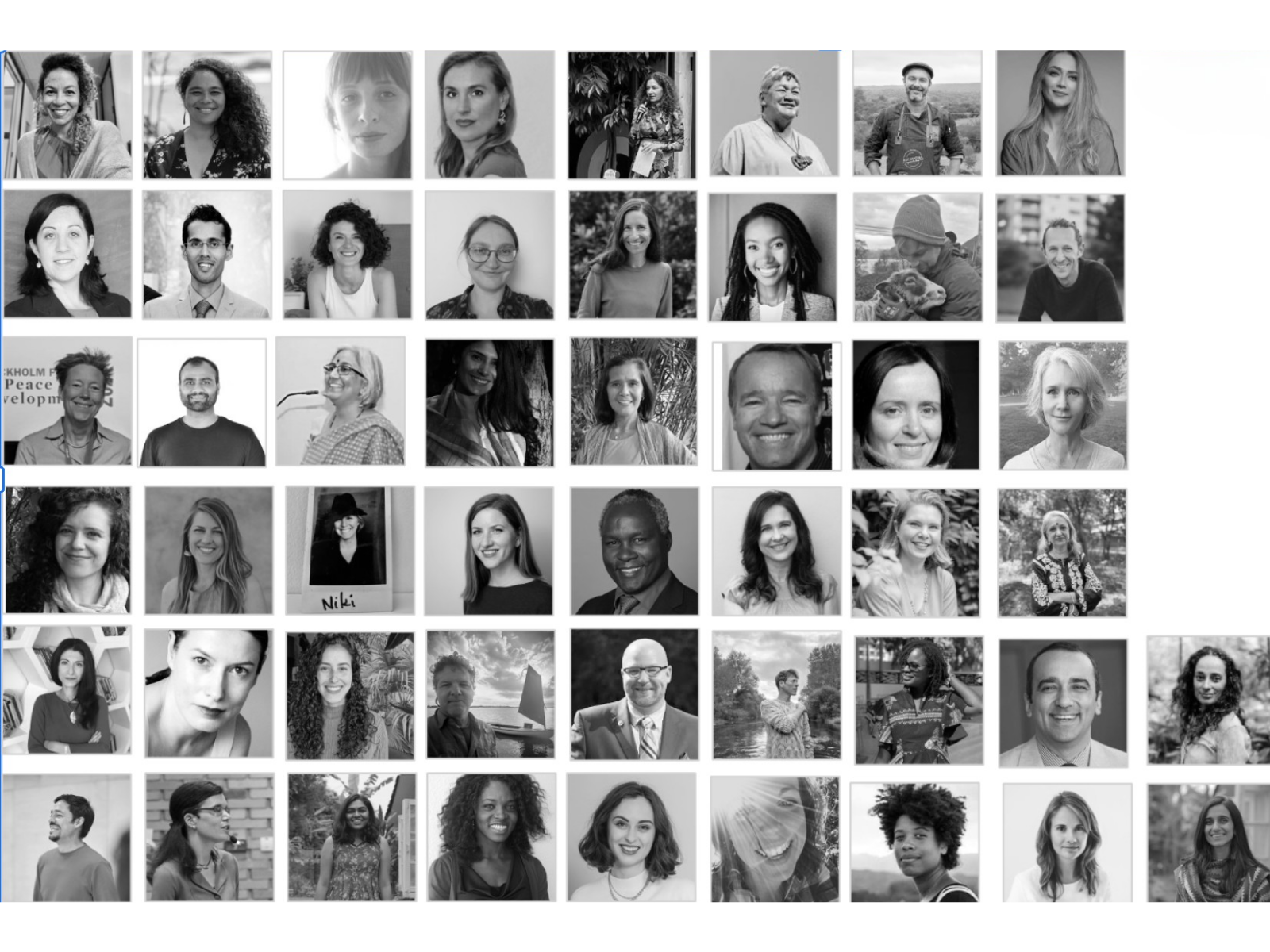
As relationships deepened through the year, we began sharing the work members were already doing in their own places. In partnership with the Marketing and Communications team, we launched the EB Member Storytelling series—bringing forward voices from across the network. These are people navigating what ecological belonging looks like in forests and cities, in classrooms and community spaces, in work that bridges ancestral wisdom and contemporary challenges.
Each story offers a glimpse into how someone is living these questions in their own context. When one person shares their experience, others recognize parts of their own. This is how learning moves—through honest reflection on what’s working, what’s difficult, and what’s still unfolding.
These stories also reach beyond the network. They offer glimpses of what becomes possible when relationships with place, community, and the more-than-human world are approached with intention and care.
Gathering at the Table
One practice that has deepened this year is the Hearth Dinner. Two members of the network have hosted these gatherings in their own communities, using the Hearth Dinner framework to create space for shared ritual, storytelling, and connection.
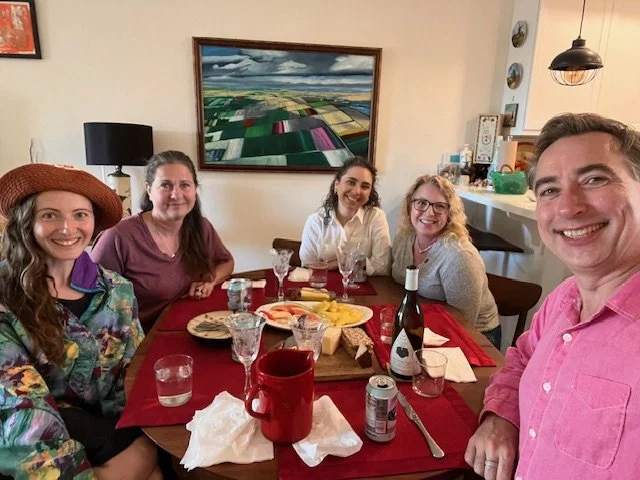
More than 20 Hearth Dinners have taken place globally. Each one offers a context for remembering; through food, conversation, and ceremony; how we are connected to land, to each other, and to the lineages we carry. These gatherings help surface memory, invite ancestral presence, and make room for what’s alive in our search for connection and the longing to belong.
The invitation to host Hearth Dinners continues to ripple outward. More members are planning gatherings in the coming months, adapting the practice to their own places, cultures, and communities.
Reweaving in the Academy
While these practices were unfolding, something significant happened in an institutional setting as well. In Brazil, a new Ecological Belonging course was developed and integrated into the curriculum at FACENS University.
This marked an important shift—bringing the principles of ecological belonging into academic spaces, where they can shape how future generations think about their relationship to the living world. It reflects a quiet reweaving: integrating what has been remembered and reimagined into systems that still hold influence over how we live and learn.
What We're Learning
We’re learning that when people are invited to bring their full selves, their love, their grief, their questions about home and kinship, something essential comes alive. This isn’t abstract. It’s unfolding in Belonging Circles and Hearth Dinners, in regional gatherings and quiet one-on-one conversations, in the moments when someone realizes they’re not alone in this work.
We’re also seeing that the strength of this network lives in places that don’t always show up in reports or metrics—in the collaborations that grow over time, in the practices that are adapted and shared, in the ways people carry this work into their own communities.
How Do We Live?

This question lives at the heart of the Ecological Belonging Network.
The network brings together people who are exploring this question in embodied, place-based ways—through land stewardship, ritual, education, art, community-building, and cultural practice. Together, we’re generating insights, offerings, and grounded approaches to living in right relationship with place, with each other, and with the more-than-human world.
Ecological belonging is not a single path. It is a field of practice—something people are actively doing, experimenting with, and learning from in real time. Across the network, members are working in different ways: through art, education, ritual, land stewardship, and community work. What connects them is a shared inquiry into how to live in right relationship with land, with each other, and with the more-than-human world.
Naming this as a field of practice matters. It means we are not just supporting isolated efforts. We are growing a shared body of knowledge, experience, and memory. It allows members to learn from each other, adapt what resonates to their own context, and contribute insights back into a wider ecosystem of practice.
The network helps make this field visible. It creates space to share what is working, to reflect on what is still unfolding, and to strengthen the capacity to grow ecological belonging across diverse communities.
Answers are emerging—from the ground, from relationships, from lived experience. The network helps them travel.
An Invitation
If you’ve been part of the Ecological Belonging Network this year, thank you. Your presence, your stories, and the ways you’re living this work matter deeply.
If you’re just discovering this network, there’s room for you here. We’ll be welcoming new members in early 2026.
If you’re working with ecological belonging—or feel called to explore what it means in your own context—we invite you to stay connected.
Follow us or sign up for the newsletter to receive updates, stories, and invitations.
